Why Homeschool?
The first step to homeschooling is making your decision to home educate your child. It is important to become informed and knowledgeable about some of the main concerns you may have. Explore these areas of our website to learn more about the initial decision to homeschool.
Making Your Decision
The reasons people decide to educate their children at home are varied and can be unique to each family. Some look towards a better educational experience, others are concerned with moral and social issues, some are concerned with safety, and still others have special needs that they wish to address. Explore these reasons and others that have led families to homeschooling.
Advantages
Ask anyone who loves homeschooling what the advantages are, and you'll probably hear a long list of the benefits of educating children in the home. Homeschooling is a journey and an adventure, with benefits and rewards for the entire family. Come find out what these advantages are and decide if homeschooling is right for you.
Teaching Your Own
Are you qualified to teach your own children? The answer is yes! It is challenging, but rewarding, to educate your children in your home. Find out what these challenges are and how to address them.
Socialization
"But what about socialization?" So the typical question goes to anyone who homeschools. Find out what socialization means to homeschooling families and strategies to engage your children and your entire family in social activities and connections.
Research & Statistics
Learn about current research and statistics involving homeschooling families, the homeschool movement, and the educational system.
Public School Issues
Many parents are basing part of their decision to homeschool on issues with public schooling, from bullying to poor academic performance to problems with governmental control.
Community Outreach
Want to help homeschooling integrate into the community at large? Are you a homeschool group leader who talks with the media or provides information to new and curious homeschoolers? Here are tips to help you present homeschooling to the public and the media.
What's Popular
The Case for Authentic Assessment
Assessment is authentic when we directly examine student performance on worthy intellectual tasks. Traditional assessment, by contract, relies on indirect or proxy 'items'--efficient, simplistic substitutes from which we think valid inferences can be made about the student's performance at those valued challenges.
So You Think You're Not Smart Enough to Homeschool?
How intelligent does a person have to be to homeschool successfully? You do not have to know all the answers in order to be a good teacher, you just have to know where or how to find the answers. You do not have to be able to do something yourself in order to be able to teach about it. A successful homeschool teacher is one who is able to impart the material to his or her students. 
Why I Don't Worry About My Homeschoolers' Socialization
Arguably, the number one question homeschoolers get is, "What about socialization?" From this side of the fence, it is a non-issue. Our homeschooled children get ample chances to interact with others. 
Home School Socialization
Many parents who home school their children are questioned about socialization. What is socialization exactly? This article looks at this questions and offers lots of advice about how to get children involved in the world around them and with other people. 
How Do I know If I'm Qualified to Homeschool?
Parents considering homeschooling are understandably concerned about whether they are qualified enough. Do parents need to be trained and certified like public school teachers? How in the world can you be qualified to teach them? The most important thing to realize is that as a homeschooling parent, you're job is not necessarily to teach your children. Instead, you are there to help them learn. 
Deciding To Homeschool Is Not About If You'll Do a Good Job
There is so much research about how useless school is that you have to be in complete denial to put your kids in school. Penelope Trunk details why the choice to homeschool was a no-brainer for her.
Homeschooling Pros and Cons
Homeschooling is becoming more popular every day, with a growth rate of 7 to 15 percent per year. There are about two million children currently learning at home. Homeschooled kids do well on standardized tests, are welcome at colleges and universities, and as adults, have a reputation for being self-directed learners and reliable employees. To help other parents who are considering homeschooling, here is a new list of pros and cons.
Better Late Than Early: A New Approach to Your Child's Education
In this book, Raymond and Dorothy Moore look at the research behind learning styles for children. The message of slowing down and responding to your child's readiness is a welcome contrast to the common practice of pushing young children through the system. They conclude that the best environment for children to learn is at home. 
Our Family's Decision to Homeschool
One mom shares her decision to homeschool her daughter after eight years in a Montessori school.
Home Schooling in the United States: Trends and Characteristics
According to widely-repeated estimates, as many as two million American children are schooled at home, with the number growing as much as 15 to 20 percent per year. At the same time, however, home schooling has received little attention compared with other recent changes in the educational system, such as the growth of charter schools. It could be argued that home schooling may have a much larger impact on educational system, both in the short and long run. This report uses the 1994 October ...
Why We Homeschool
It is a common misconception that most parents homeschool due to bullies, school shootings, or bad teaching content. While these things are important, there is a higher purpose for choosing to home education your children. Even if all those things were corrected, there are stronger reasons to stay committed to the homeschool model. So why do you homeschool? This book looks at the meaning and significance of a true Christian education. 
Homeschooling Is Growing Rapidly in Many States of the United States
Includes statistics from around the country detailing the number of homeschooled students. Also discusses the growth of homeschooling around the world.
101 Reasons to Unschool
Wondering why anyone would unschool their children? Well, here are lots of reasons why unschooling is a good choice. From the fun aspect, to the superior learning, to the avoidance of the unpleasant parts of school, this list gives you lots to think about if you are considering the unschooling approach to the education of your children. 
It's a Myth That School is Good for Socialization
Parents who have their kids in school often say they have them there because of socialization. It's absurd that homeschoolers talk to people of all ages, all day long, and kids in school have to listen to a teacher all day long. It's just not even a contest: homeschooling is better for socialization because parents value it so much and schools don't.
Home-Schooling: Socialization not a problem
One of the most persistent criticisms of home-schooling is the accusation that home-schoolers will not be able to fully participate in society because they lack “socialization.” It’s a challenge that reaches right to the heart of home-schooling, because if a child isn’t properly socialized, how will that child be able to contribute to society? Home-school families across the nation knew criticisms about adequate socialization were ill-founded — they had the evidence right in their own homes. In ...
Resources
The Exhausted School: Bending the Bars of Traditional Education
These 13 essays, presented at the 1993 National Grassroots Speakout on the Right to School Choice, illustrate how education reform actually works. Written by award-winning teachers and their students, these essays present successful teaching methods that work in both traditional and nontraditional classroom settings. “Gatto’s voice is strong and unique.” — Thomas Moore, author of Care of the Soul
Should I Home School?: How to Decide What's Right for You & Your Child

Have questions about homeschooling? This book has the answers. The information in this book will help you decide if homeschooling is right for you and your child. 

But What About Socialization? Answering the Perpetual Home Schooling Question: A Review of the Literature
This book by Dr. Susan A. McDowell  uses research, statistics, and the experiences of homeschooling families to answer questions and counter myths about homeschooling and socialization. Read through a discussion of the multiple meanings of socialization, what parents, leaders, and children have to say about the issue, and what the research shows. 
Dumbing Us Down: The Hidden Curriculum of Compulsory Schooling
This radical treatise on public education has been a New Society Publishers' bestseller for 10 years! Thirty years of award-winning teaching in New York City's public schools led John Gatto to the sad conclusion that compulsory governmental schooling does little but teach young people to follow orders as cogs in the industrial machine. In celebration of the ten-year anniversary of Dumbing Us Down and to keep this classic current, we are renewing the cover art, adding new material about John and the impact of the book, and a new Foreword.
The Homeschooling Revolution
A readable, scholarly overview of the modern day homeschooling movement. Includes vignettes from homeschooling families, war stories, research information, media reaction, footnotes, and statistics.
They're Your Kids: An Inspirational Journey from Self-Doubter to Home School Advocate

For many people, their schooling was uncomfortable, tedious, and sometimes a waste of time and energy. This book offers the idea that the public school system is tragically flawed and that we are able to do better for our own children. Sam Sorbo, mom of three and wife of actor Kevin Sorbo, took the leap into homeschooling and found the joy and success she was seeking. Included are strategies for working parents, those who are scared to take the leap, and anyone who wants the best for their children. 

Why We Homeschool

It is a common misconception that most parents homeschool due to bullies, school shootings, or bad teaching content. While these things are important, there is a higher purpose for choosing to home education your children. Even if all those things were corrected, there are stronger reasons to stay committed to the homeschool model. So why do you homeschool? This book looks at the meaning and significance of a true Christian education. 

Homeschool Bravely: How to Squash Doubt, Trust God, and Teach Your Child with Confidence

It's time to change your perspective to transform the way you plan, teach, and homeschool. This book helps you to see homeschooling as a calling. With this mindset, you'll be able to dismiss the stress of impossible expectations. Find strategies to help you juggle the logistics of homeschooling with different ages, be a good support for a struggling learner, set realistic goals, dismiss the guilt, and weather any criticism. You can be a hopeful homeschooler! God uses all for good and can transform all of your stress, fears, shortcomings, and successes to create the best plans for your family. 

Kingdom of Children : Culture and Controversy in the Homeschooling Movement (Princeton Studies in Cultural Sociology)

More than one million American children are schooled by their parents. As their ranks grow, home schoolers are making headlines by winning national spelling bees and excelling at elite universities. The few studies conducted suggest that homeschooled children are academically successful and remarkably well socialized. Yet we still know little about this alternative to one of society's most fundamental institutions. Beyond a vague notion of children reading around the kitchen table, we don't know what home schooling looks like from the inside.

Sociologist Mitchell Stevens goes behind the scenes of the homeschool movement and into the homes and meetings of home schoolers. What he finds are two very different kinds of home education--one rooted in the liberal alternative school movement of the 1960s and 1970s and one stemming from the Christian day school movement of the same era. Stevens explains how this dual history shapes the meaning and practice of home schooling today. In the process, he introduces us to an unlikely mix of parents (including fundamentalist Protestants, pagans, naturalists, and educational radicals) and notes the core values on which they agree: the sanctity of childhood and the primacy of family in the face of a highly competitive, bureaucratized society.

Kingdom of Children aptly places home schoolers within longer traditions of American social activism. It reveals that home schooling is not a random collection of individuals but an elaborate social movement with its own celebrities, networks, and characteristic lifeways. Stevens shows how home schoolers have built their philosophical and religious convictions into the practical structure of the cause, and documents the political consequences of their success at doing so.

Ultimately, the history of home schooling serves as a parable about the organizational strategies of the progressive left and the religious right since the 1960s.Kingdom of Children shows what happens when progressive ideals meet conventional politics, demonstrates the extraordinary political capacity of conservative Protestantism, and explains the subtle ways in which cultural sensibility shapes social movement outcomes more generally.

A Different Kind of Teacher: Solving the Crisis of American Schooling
In 1991, shortly after receiving both the New York State and New York City Teacher of the Year Awards, John Gatto resigned to begin a new career as an education reform advocate. In this collection of 16 essays, Gatto analyzes the problems of American education and suggests solutions for revitalizing the system — prescriptions that run counter to current trends.
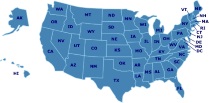
Looking for Another State?
Featured Resources

As an Amazon Associate, we earn from qualifying purchases. We get commissions for purchases made through links on this site.

Only Child: Writers on the Singular Joys and Solitary Sorrows of Growing Up Solo
Only children don’t have to share bedrooms, toys, or the backseat of a car. They don’t have to share allowances, inheritances, or their parents’ attention. But when they get into trouble, they can’t just blame their imaginary friends. In Only Child, ...
The Story of the World
This book series by Susan Wise Bauer is another that is best enjoyed as a read aloud rather than seen as a history textbook. It is full of engaging stories, mixing facts and historical legends. The companion study guides offer questions, narration ex...
100+ New Jersey Drivers Licensing Exam Facts That You Need To Know: Quick Review for the Written Test
Prepare for the New Jersey's Driver's Written Exam. Know the 100+ important facts for the test. Be prepared to ace the exam!
Pass Your New York DMV Test Guaranteed! 50 Real Test Questions! New York DMV Practice Test Questions
This book is written by a former DMV classroom instructor. He shares the 50 most common questions and answers to the New York DMV written test. A great guide to help your teen pass the DMV test on their first try.
Dr. Montessori's Own Handbook
A short, illustrated guide to the use of Montessori classroom materials. Describes how to set up a "children's house" - an environment for learning where children can be their own masters.